"Is music journalism dead?" We were wondering that, too! So, this week DiS dedicates the bulk of our editorial to pondering that very question. We kick off with a quick word from DiS editor Sean Adams before handing you over to the editor of this week of content, Everett True.
For me, reading about music was not just what ignited my passion for music but what doused it in kerosene. It wasn't just reading what these fit-to-burst enthusiasts had to say about releases which informed both my knowledge and taste but it was their ability to articulate it. For a few hours each week I was captivated by their combination of words which would never be found in any of the books on the school reading list. The fact that these funnyfucks, with their reference points I often hadn't heard of, were writing about music like it mattered more than anything EVER, made them like the older siblings and impossibly 'cool' friends I had always wanted. The passion poured off the inky pages whilst the imagery fisted my imagination as if it was some forbidden psychedelic pop-up book.
Of course, this isn't an isolated experience. It was this weekly escape into the minds of a bunch of lucky bastards who somehow managed to get a job where they pay you to write about music for a fricken living, which was responsible for kick-starting several generations' musical obsessions (some might say addictions). This is all stating the bleeding obvious, sorry, but what is perhaps maybe not so apparent is how these writers and magazines and the way they made people passionate, led to a few of the readers getting more and more interested and involved in music. For me, it was sitting with Melody Maker (R.I.P.) in tutorgroup every Wednesday morning - ignoring all the background noise from my teacher with their warnings about drugs and reminders to pay for school trips - munching up all this passion and information which inevitably led me to starting a fanzine, which led to the formation of DiS. For others it was getting a job in a record store (ok I did this too), putting on gigs (ditto), starting a label (guilty), managing bands (oh shit, I'm such a fucking cliché) and getting involved in other such stuff to do with music because of an unrelenting love, not money. "Whatyoumeanyouwillpayme?" Indeed.
I'm not alone. For decades it was a simple cause and effect for those afflicted with a magazine habit. I've gotta raise my hand and say I still buy at least five music mags a month. I love the smell of magazines, I love the fact people have slaved away to publish something, I love that magazines, much more than the internet, can dedicate SPACE, with page after page of words and imagery about something they've decided to flag up. Wherever I am, I probably spend more time in the magazine section of Borders than any other store, but that's an aside... With the birth of the internet, a whole different bunch of 'shit' hit the music fans. As some kinda web two-dot-oh-no 'evangelist' I'm asked on a regular basis to discuss how 'the internet is better than and killing music mags, good riddance', at conferences. I could bore you with a brief (stating the fricken obvious 2000-word) history of how music journalism has been afflicted by the internet, or you could just watch this:
An interesting debate arose from the above on our boards and a lot of the same kinds of points were made in response to the news that Plan B magazine was closing. If magazines are dropping like heroin- munching flies, is music journalism dead? Or rather, if not as many people have an interest in reading what the experts think, can they ever truly become experts themselves, and won't this fuck up the cause-and-effect which has spawned a passionate intelligentsia who get involved with music for love not money? Won't it result in people descending down Last.fm-selected niches of specialist interest until every band they listen to sounds almost exactly the same as something they sort of liked 3 years ago?
With these questions and more in mind, I swapped a heap of emails with legendary journo and sometime DiS contributor Everett True, (who famously introduced Grunge to Britian/Kurt-to-Courtney and founded Careless Talk Costs Lives which later became Plan B) concerning running a piece about why Plan B closed, with me pondering whether it is symptomatic of the recession or the internet age and, basically, whether music journalism doomed. Then Swells - the magnificent MAN OF CAPITAL LETTERS - passed away, and we swapped emails about how there might never be another Stephen Wells in an age of pithy blogposts, where clicking an audiofile supercedes imaginative description. Neither of us could agree whether the ranting dude on the video above was right or simply a bloody good excuse to throw some of the questions out there and do a whole week on the subject.
This week, we hope to tackle a heap of these issues on DiS. There are a lot of questions but we also want to offer solutions, so each day there will be a bunch of "how-to" guides. But we will, with the help of the great and the good (and one of Mogwai), be tackling and dodging some of the big important questions. Ones like: in an age where everyone has an outlet for their opinion, do the opinions of these self-appointed 'experts' really matter? Or, what is the difference between a critic and a journalist anyway? Do either have the same influential sway in the modern day? Are all these pithy 50-word reviews found everywhere, from free newspapers like Metro and the Londonpaper to 100 word live reviews in the back of newspapers, really 'journalism'? Why are the few remaining music magazines turning into wafer thin gossip rags whilst the bulk of their music coverage feels like a chart-obsessed, catch-all cesspool for oh-so-new radio-playlist-friendly music? And will The Face and Smash Hits ever return?
Essentially, it'd be childish to ignore the tsunami of change or to not hear and fear the sound of dead tree editions falling, but even with DiS introducing a user score system later this week, we still believe that these passionat,e poetic people and/or hateful drunk'n'rambling fuckwits are important.
Music journalism is dead, long live music journalism.
The 'Music Journalism R.I.P?' week is guest-edited by Everett True. You can find his blogs online at everetttrue.blogspot.com and also everetttrue.wordpress.com

From the archive
-
Get stuffed! DiS summer BBQ - TODAY!
-
DiScover: Public Relations Exercise
-
Thom Yorke: Radiohead & Trading Solo (Book Review)
Really?
For a whole week? How about some features about music as opposed to journalism. Sorry I'm just bitter today.
Somebody told me Smash Hits was back for a special MJ issue..?
Is that true or did I hallucinate?
It just seems that this is all to personal.
It has absolutely no relevance to what I love about music, and while I'm sure it's important to Sean and many other DiSsers, I would rather read about the people behind the music, not the people behind the industry. I don't begrudge you the right to do this extended feature, and I'm sure many will enjoy it, it's just that it feels like writing about the death of music journalism, as opposed to writing about music, is the final nail in the coffin. But then what do I know.
well
we do write about an awful lot of music but this is a topic a lot of people are debating but also not one which has any medium in which to be debated. we just wanted to focus the debate alongside our usual content (which admittedly is thinner on the ground due to a low volume of great releases at this time of year, combined with most of our contributors being lost in and shattered by from festival coverage)
hopefully you'll read some of the pieces and realise why we've decided to do this.
well
I'll give it a shot. I'm all for keeping an open mind about it. Prove me wrong!
...
http://www.guardian.co.uk/music/2009/jun/27/music-writing-bangs-marcus
an interesting read.
thank you
this was one of the other reasons we decided to do this week, seemed to be some pertinent points. i forgot to mention it in the intro. whoops.
yeah
think it will probably act as a pretty good intro for the stuff you want to look at.
i think, the thing is....good writing needs to be recognised and spoken about more. like, specific pieces. when was the last time someone posted a link for a review just because it was an example of great music journalism or whatever...i mean, it happens...but not as much as someone will post a link because something has been given too high/low a score....is full of praise/hate...tries to be really funny/stylistic.....my point is, it's only the extremes of music journalism that seem to raise eyebrows and no one seems to talk about just great writing, perhaps regardless of the point being made.
i think this week it would be really good for people like you and your guest contributors just to give specific examples of music writing that they have loved in the last few years and made them think...'yeah...this is what it's all about'....because if that doesn't get seen or talked about...you can do the state of the nation stuff but then you're still missing the most obvious bit.
and if no one can think of a piece in the last year or two that shows them the point/beauty/value...blah blah...of music journalism...well, then maybe that's the issue.
length is the thing for me (ooh-er) i'd much rather music publications/outlets etc just looked at three albums in depth rather than try and have a little bit on everything. it doesn't seem to be the general consensus, but i'd rather read 1000 words than 100.....especially the way things are today when you will end up reading twenty small-ish pieces on the same album, most saying the same thing.
you'll be excited to know
that for next week we've teamed up with rocksbackpages.com to bring you some of the best bits of music writing of all-time and will be putting together a bit of a recommended book reading list :)
Information Asymmetry has shattered music journalism
My two penneth worth is not actually based on journalism; I have never purported to be a journalist, I value the skills of journalists and defer to them to a larger extent. It is a misnomer to believe that out of the ashes of the traditional media will rise a band of noble bloggers in their place. Perhaps this is not as true in music journalism though, perhaps, in a time where the written word on the web is juxtaposed next to the music itself, the skill of writing means less.
I say not to cheapen the excellent work of music journalists, I always have and still buy music magazines. The bands I do press for still rightly see a review in a magazine as gold dust, however much I try to not over egg expectations, they still feel a great/bad review in a magazine is the be all and end all. There is no doubt I support and want magazines to stay around – but I think the biggest factor missing in this debate is a rather simple economic idea – information asymmetry.
Eh? Well, prior to the internet, there wasn’t a glut of information at my fingertips. I would buy NME, Select, Melody Maker etc…primarily as this along with peer recommendations was a filter in what to listen to. My relative youth would mean I was more willing to be spoon fed by people who I saw as knowing more than me. Knowledge, based on information asymmetry, was the key factor. The journalist would know more, but also have access to that music – the option for me was to either buy it off the back of the words, or hopefully hear the music via a video etc. The information premium was very much in the journalists hands.
Now of course we are dealing with a wholly different beast – there is no asymmetry in the information we possess. Why will people take your word for it when I can listen and review myself? Of course, even to this day I regularly get turned onto stuff via magazines, but that barrier is well and truly shattered. Everett True is a name I always saw as legendary, the guy who broke Grunge in the UK – but we will never ever see such an honour bestowed today – how likely is a music journalist to do that in today’s climate? The information asymmetry is shattered, I can check out American bands the same as the next person.
That is unfortunate, I very much see myself against the ‘freetards’ culture Web 2.0 has brought. Journalism carried out skilled people is necessity, but in music the information barrier has been broken.
that's really cool and i look forward to reading it
but i'm talking a bit more about recent bits, like the last couple years...to show that there are still great things to be read and we aren't just going on about years gone by...if there are recent pieces included, well that's all good.
think it's interesting to delve into the difference between books and print/web publications too. (harris touches on it a bit i think)
My thoughts:
Really interesting to see a series like this on a music website, I guess well done? Or not, I'm not sure.
There's a lot of value to be taken out of writing not as a means to an end, but a means in itself. That said, more opinion gives more variety and a greater audience en masse - this shouldn't mean that you feel you're speaking to no-one.
I look at the great Gonzo journalists and sometimes wonder whether anything I write has any value (non-instrumentally) but that's more a temporal/contextual observation than one related to the fact that we're living in 2009.
This isn't music journalist specific either - it's the same everywhere, isn't it? Is this to say "music R.I.P"? Or "job x, R.I.P."? No, it's just that there's more to prove. Which'll make for more passion, desire and opportunity - just in a realigned pool.
This would've been better if...
... the second paragraph opened with the sentence:
"There's a lot of value to be taken out of writing not as a means to an end, but an end in itself."
Now that wouldn't have happened in the days of Quark-as-boss...
Very interesting, but....
...I reject the idea that people are listening to a smaller variety of music thanks to the internet. Frankly in the days of Melody Maker (good) NME et al, anyone narrow minded enough not to seek out new and different music probably wasn't even going to buy the magazine in the first place, because they weren't interested enough by it. Therefore the magazines weren't likely to convert many people from their one-genre ways by featuring this variety of acts. It's sort of preaching to the converted (which is not to say it's a bad thing by any stretch of the imagination).
The fact is that it's always been the case that the majority of people, whilst they might profess to being generally keen on music, aren't in love with it in the same way as that small minority of people who used to read Melody Maker and who now read sites such as DiS or or whatever their current favourite music blog is. For the majority, all the blog/twitter stuff has practically no impact on their listening habits - it only really has an impact for the technically savvy, forward thinking, die-hard music fan, and those guys by their nature are always going to be seeking out something new no matter what.
Meanwhile, I actually believe that because of the internet in general, people are listening to a relatively greater variety of music. It used to be that you were 'into punk' or 'into hip-hop' or 'into new wave' or whatever, and that informed not just your record collection but your fashion sense and choice of friends. But can you seriously think of a 'scene' so all-encompassing that has made it's way into the national consciousness since Brit-Pop? Grime came close I suppose but it was quickly appropriated by other genres and the mainstream, whilst New-Rave was a joke no-one even wanted to be associated with.
Since the real rise of the internet people have been able to share and experiment with so many genres, cross pollinating them along the way, that now you can't really look at a person and 'know' what they're into straight away - they could be into any number of things because the divides between all our little mini-cultures created by genres of music have been falling down.
The idea that the internet somehow stops your average music fan from listening to anything new or different is honestly quite baffling to me...
I was interviewed by the Scotsman recently on the whole IS MUSIC JOURNALISM DEAD thing...
I said no.
Don't be silly.
Go sit in the corner and think about what you just said.
If music journalism is dead
then your very own Everett True might well havde played an integral role. His recent 'defending the indefensible' blogs are up there with some of the most banal and tiresome pieces of 'music journalism' I have ever read. Quite a fall from grace...
guys, guys
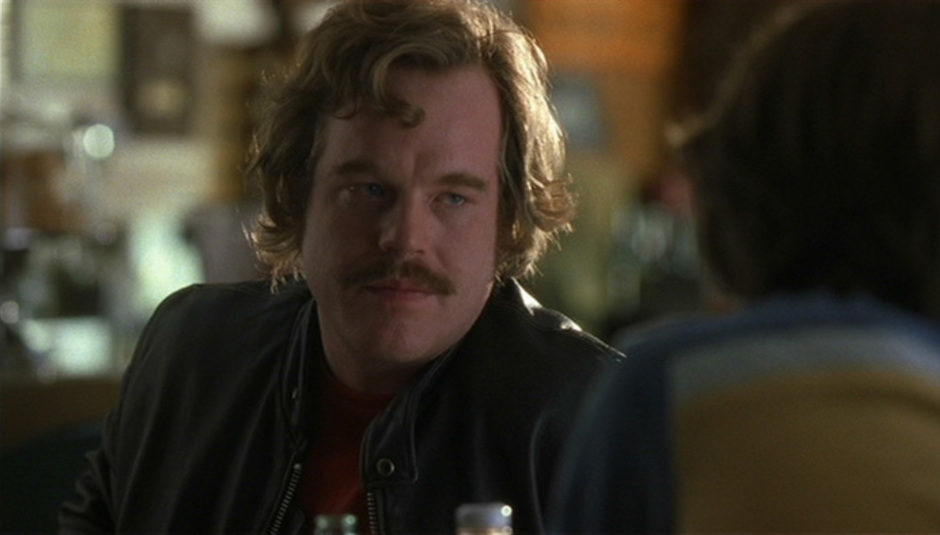
couldn't you have found a real picture of lester bangs?
PSH on the front page of DiS has been waiting to happen for some years now.
This was the perfect excuse.
access and denial
With regards to the comment marcusian123 made, "The information asymmetry is shattered, I can check out American bands the same as the next person", I completely disagree. To be able to do so, you need to be informed, need awareness, have privileged information that "the next person" simply doesn't possess. Yes, everything (???) is available on the web. Hidden in plain sight.
And I fucking really hate that John Harris article. I posted something about it here. http://everetttrue.wordpress.com/2009/07/01/the-death-of-the-critic-pt-5317-stop-yawning-im-serious-this-time/
The "defending the indefensible"
blogs are propably some scheme to pinpoint the subject of how bad things really are. propably there's a "look, I made these shitty posts about mediocre bands I don't like and now they are getting more attention than the 4000-word piece on the importance of good music journalism!"-piece on it's way. or not? I hope they were a joke.
I think that probably is getting a little deep and twisting the meaning to what he/she really meant...
...I don't think they were talking about critical faculties, in short. Though if you start going down it's a bit slippery. Who is the next person? Who is the next person to the next person? ETC.
if we assume that the-next-person is someone who actively searches for new music with all the resources of the internet at their disposal, which it's probably fair to do if it's the-next-person-replying-to-this-article, is your "privileged information" really that privileged? have you got some vast steve bruce style system of music scouts feeding you hot tips on new bands from ecuador?
either your Tastemaker Critic is not really for those sorts of people and geared towards those without the time or inclination (in which case i can get alongside it) or you genuinely believe in your "experts are experts are experts" line in the swells thread - would i be happier listening to your tips than the bands i dig out of the world/net myself? is the music you push IMPORTANT or some similar guff?
that's quite accusatory and incoherent
i had a couple of beers for dinner and i'm feeling a bit tired and kranky. the tone should be more intquisitive, less angry.
This rather gets my goat.
"we just wanted to focus the debate alongside our usual content (which admittedly is thinner on the ground due to a low volume of great releases at this time of year"
There is ALWAYS a high volume of great releases, and if you don't think so, you aren't doing your job as a critic, you're just waiting for someone from a PR company to do it for you.
i'd agree
had i not spent the most part of this decade signing acts, managing acts, finding them prs and often doin some of the prs job.rather than post a twatty comment, why not tell us 10 albums we should be covering this week. anyone can be a negative ass.
Thanks Everett
Everett,
Thanks for the response.
The point is that music journalism is LESS of a filter (and therefore less ‘important’), because you now harness LESS information asymmetry. You seem to misunderstand that point by making another point.
The monopoly of information has been broken, the tools are there for people to use. They may not have the direction per se, but that is an post-internet creation.
Why does some new jack kid need a music journo to describe to them something, when they can go listen to it themselves? Of course, within that remains the journo being a signpost to cool stuff, but the journo wields far less power or relevance today.
By their very nature a person reading your article is 'aware', that person now has exactly the same access that you do, altering the asymmetry.
tightrope walking
Correct. The monopoly of information has been broken. It had always been broken, to a lesser or greater extent. What does that prove?
Three examples.
1) There are builders outside, replacing my roof right now. I have the same access as them to all the tools required to finish the job - the scaffolding, the tin, etc. Could I? What do you bloody think?
2) All a tightrope walker requires to complete their craft is a rope strung between two poles. That's all I need as well, in theory.
3) School textbooks. We all have equal access to those, correct? So why do some learn faster and some slower? The Internet hasn't levelled off hierarchies (of power, of information), not at all. It's simply destroyed some and created others. HOW DOES THE NEW JACK KID DISCOVER WHAT MUSIC SHE WANTS TO LISTEN TO? WHEN? WHERE? Oh, by trawling through thousands upon thousands of sites themselves...thereby becoming (to all intents and purposes) "an expert". DOES EVERYONE DO THIS? DOES EVERYONE DO THIS? Really?
Alternately, they turn to trusted platforms (P4k, DiS etc) who point them in appropriate directions.... which is what has always happened! There has always been hundreds of thousands of music fans, expert in their own fields. The Internet didn't suddenly change that fact: it just confused the field by flooding it with too much information.
the person reading this article
Do they have exactly the same access to information as I do? Really? How so? Are they me?
and
With regard to this point (again), marcusian123, "The information asymmetry is shattered, I can check out American bands the same as the next person."
There's a reason for that. You're motivated. You have a vested interest in doing so. Most users surfing the Internet do not. (Goes back to the classroom: why do some learn fast, and some slow.) Sure, it means that folk like you no longer need to lean so heavily on folk like me. And that's fine. Doesn't mean the same applies everywhere.
Fair enough, Sean
Here's one: 'Noot D' Noot' from Atlanta, GA just released their second LP (mini album, I guess) on Shakedown Records. These guys are blowing up down south, and have already worked with Sleepy Brown (of Outkast / Dungeon Family fame).
THey are a crazy mix of Fela Kuti, Hawkwind, P-Funk and Neu! and I think someone at DIS will love them.
www.myspace.com/nootdnoot
nootdnoot.blogspot.com/
PS: I am not in this band.
PPS: Sorry for being a twat. I had a negatoid moment.
I've loved the articles so far - they make me feel hopeless and reassured simultaneously. It's like walking on a cushioned tightrope.
Who needs music journalism like we knew it anymore? These days you can share music so easily with
some very cool people everywhere in the world, as well as discussing it in depth with them. The sort of cultural isolation the majority of obsessive music fans went through before the advent of the internet has almost completely gone, therefore relying on the often half-baked, normally dishonest opinions of some ''insiders'' isn't necessary any more. Hence the prolification, especially in the UK, of some serious whinging from has-been music journalists like Everett True.

In Photos: Arctic Monkeys @ Wembley Arena, London
In Photos: The Flaming Lips @ The Academy, Manchester
In Photos: Moby @ The Palace Theatre, London
In Photos: Tegan & Sara @ Shepherds Bush Empire, London
Comments
- Post a new comment on this article