Sign In:
Login with Facebook
68497
Type: Album Release date: 16/05/2011
Your Rating:

If there is such as thing as a prog spectrum, then at one end would be the boundary-obliterating muscle of The Mars Volta, which rips through any musical language it encounters by dint of virtuosity and simple compulsion. At the other end would be the kind of prog made by Memories of Machines; a sound more influenced by the melancholy of Vangelis and fantasy of Marillion. MoM are the slow-moving fog to TMV’s thunderstorm. It's testament to the rehabilitation of the much-maligned genre that there is now even a tacit acknowledgement among music fans that an acceptable side of prog exists. Secret Machines, The Flaming Lips and TMV have all done wilfully strange things without feeling the need to involve jesters at the knight’s table. Hell, even Kanye is sampling King Crimson these days.

There is however a strand of prog which still exists outside of any notion of fashion or popular momentum. One which to the casual onlooker exists in a gossamer-thin fantasy world, where life’s complexities are melted down and reassembled into a form where magic exists and women do find role-playing board games attractive. It's too easy to scoff at the wilder outposts of prog, like at school when you couldn't help but feel a guilty thrill watching the puniest kid in the year take his lumps from the comprehensive's Nelson wannabe. Warm Winter sounds like the album that kid grew up to make. The chief offence comes from the breathless vocals of Tim Bowness. It's like the man is so dramatic he just can't catch a bloody breath. Were it not for the grating widescreen-aspect-ratio drama packed into every syllable of the vocals, this album would have a much better chance of enticing some passing trade.

And yet, these epic visions of fantasy continue to be popular among a devoted fanbase. Proof comes in the tens of thousands of YouTube views for one-half of MoM Giancarlo Erra's other project Nosound. To be fair, he is not the breathy vocal guy, but Erra makes music very similar to MoM and seems to be doing alright out of it. So there must be something to it right? Well taken on its own terms, Warm Winter will probably delight fans already familiar with those involved. The album moves at a grandiose, glacial pace, as if demanding patience as the price for entry to the lush alternate realities it creates. Opener 'New Memories of Machines' sets up the tone of mysterious futuristic heartbreak which runs throughout with a slow lament, but before you can say 'unreliable narrator' out come the gargantuan riffage and gospel choir on 'Before We Fall'. 'Beautiful Songs You Should Know' is one of the moments on the album which, if it were an instrumental, could probably make a fairly credible entry into the world of modern classical. As it is, lyrics like "Loving arms and cowboy guns, mothers holding wayward sons, breathe in the light, breathe in the light" leave you in no doubt that this is ultra-prog. Track 4four veers dangerously close to playing to the indie crowd, seeing how it is basically a rejigged arrangement of 'True Love Waits' by Radiohead.

'Change Me Once Again' starts brightly with a bit of delay and electronic murmuring before settling down with another narrative-driven dramatic wash of guitars, piano and background vocal harmonies. 'Lost And Found In The Digital World' is back to essaying the breakdown of romance in the modern age. Again Bowness' lyrical villainy comes to the fore here; the rhyming couplet of "nervous online daters, constant life debaters" being particularly hard to stomach. The album closes with 'At The Centre Of It All', probably the best of the ten tracks here, a combination of the modern classical strings evident on 'Beautiful Songs You Should Know' with subtle electronic treatment of Bowness' vocals. Warm Winter apparently features guest appearances from numerous prog luminaries, including Peter Hammill of Van Der Graaf Generator, Colin Edwin of Porcupine Tree, Robert Fripp of King Crimson and Julianne Regan of All About Eve. While it's very difficult to pick out any individual moments those names may have been responsible for, the epic scope of this album is certainly enough to house such a revolving cast of musicians. Ultimately, your response to those guest spots will likely mirror your thoughts about the record as whole. If an album ever had the potential to delight aficionados of a genre, but almost no one else, this is it.

Harlequins-R-Us?

Hi Robert,

It's always a little upsetting to have work you're partly responsible for (and have enjoyed making) criticised in public, but I know it's inevitable when review copies have been sent out. Equally obviously, this isn't the first time I've had a bad review.

I accept you don't like MoM's music much or my voice and lyrics at all, but I feel you've partly criticised Warm Winter for something it isn't and was never intended to be. Namely, Prog. Hence my reason for writing.

It seems to me that influenced by some of the guest players associations and the record label's PR sheet (which we haven't seen, btw) you've used Warm Winter as a means to voice a series of observations about parts of the genre you have issues with (jesters, fantasy literature, role-playing board games etc).

As MoM have no history of working in the genre (and don't have a Prog fanbase as you seem to think we do), I'm not sure that aspect of the review has anything to do with Warm Winter, to be honest.

My main band No-Man (who were signed to One Little Indian) emerged out of the late 1980s / early 1990s sample-based Indie Dance / Trip-Hop scenes (with influences such as Scott Walker, Steve Reich, Bowie, Donovan, Miles Davis, Talk Talk, Nick Drake, Massive Attack, Bjork and Prefab Sprout), while Giancarlo's band Nosound would consider Bark Psychosis, Amiina and Sigur Ros as their main inspirations.

Don't get me wrong, I love some Prog music/bands, but I genuinely believe that anybody who knows what the genre's artists actually sound like will be extremely disappointed if they buy Warm Winter expecting Marillion mark II.

Most of Warm Winter consists of simple, mainly acoustic, love songs and Ambient/Classically influenced drift pieces.

There are no side-long suites, tricky time signatures, complex instrumentals, fantasy lyrics or musical nods to any Prog artists I'm aware of (beyond some hints of Pink Floyd, perhaps).

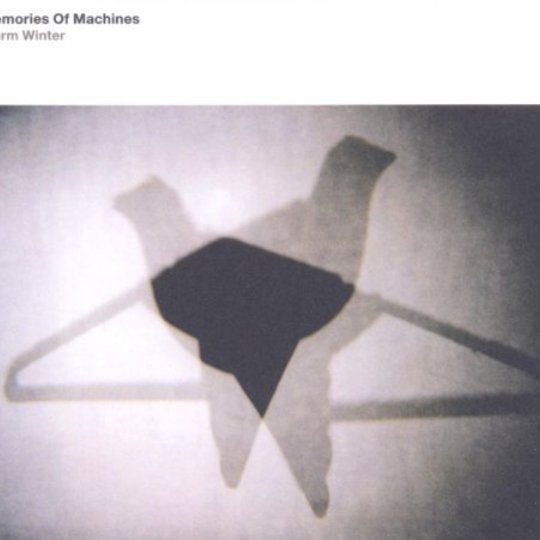
As the artwork (closer to the ECM Jazz label than Roger Dean, I'd have thought?) also suggests, whatever Warm Winter may be, it isn't very Wakeman, Hackett or Games Workshop.

Tim (MoM)

From ELP to Talk Talk... from "Tarkus" To "Spirit of Eden"...

The words of Robert Ferguson reveal a scarcity of sensitiveness, intuition and respect of the musical matter (and of those who give life to it) and in terms of fair-play. Surely Ferguson does not have enough clearness of view to describe the boundaries of (progressive) music, putting in the same cauldron, both ELP, King Crimson and David Sylvian or Talk Talk.
Well does Mr. Ferguson know the importance of a band like no-man in the History of Music (a "minor" history only for the obtuse cavemen of the future), providing a quintessential sublimation of “pop concept” through important albums like “Returning Jesus” of “Together We’re Stranger”? Why doesn’t he mention Tim Bowness’ no-man? We have enough elements of ambient/jazz/electronic/elaborated pop/dream folk to provide some parallelism with historical artists such as Brian Eno/ Late Talk Talk/ Bark Psychosis /David Sylvian but also with contemporary bands (or followers) as Hood, Yellow6, Tram, Epic45, Low, Yo La Tengo, Slowdive (especially "Pygmalion" album). All this stuff has nothing to do with the stereotypes of Classic Prog: we have a minimal concept of epic here, a minor emphasis with no teathrical approach, with masked or painted faces.
Does Ferguson have a pale idea of what ultra-prog means?? Should I remind him of some recurring themes of “classic progressiveness”, mythical creatures, sirens, ancient gods and fauns and unifauns, even if sometimes used under a methaphoric meaning? Vangelis, Marillion? And which Marillion… Fish era or Steve Hogarth era, being them two worlds apart?? Is this the only spectrum of knowledge that Robert Ferguson has in its background? Please, Mr. Ferguson, open up the booklet of a Genesis you prefer (classic era, obviously) e try a new confrontation, if you want to speak/write of ultra-prog.
King Crimson are not a great and essential band only because Kanye West uses a sampling of them. They were (are) definitely post-prog and a seminal out-of-range experiment that will teach a way out of schemes for generations and generations of future (not-only-prog) rockbands (see Battles only for a latest example).
Ferguson has all the right to dislike an album, but using a more cognitive vocabulary.
In case he won’t, he’d be better to move back to the basic school of rock.
Stefano

what is ferguson on about?

This is a slack review that uses the lazy critics favourite flogging horse “prog rock” to a release that has minimal if any connection to that genre.

Saying the band can be considered somewhere in the spectrum of “prog” is just plain dumb. Can we put Kayne on that spectrum? How about The Unthanks or Kurt Elling who cover King Crimson tracks?

Other than hints of Pink Floyd in the approach to sound and production on this album there is little in the work of either of these artists outside of this collaboration or in it that is ‘prog” or it’s new sub genre “ultra prog”?

Take out the lazy slag off prog references in the review and what you get is very little: references to a melancholy, slow paced album and the authors dislike of Tim’s lyrics and vocal style.

The review advises the album has “the potential to delight aficionados of a genre, but almost no one else” and then rephrases it: “will probably delight fans already familiar with those involved.”

So those that know these artists will like it and those that don’t (like the close minded reviewer) won’t? Why? - because of slack writers like Ferguson who don’t like what they don’t like?

This album features contributions from some artists who operate in variety of musical areas but to label them only as “prog” is a bit narrow. I suppose Paul Simon is prog because Tony Levin played bass on his albums? And it was news to me that All About Eve were a prog band.

A poor review of a good album that more people should hear but who may not because of the closed attitudes of lazy critics who want to confine artists into boxes. The author is 27 years old and lists his interests as “trying to style my long hair in a way that doesn't make me look like a fool” perhaps he should apply this filter to his online writing and develop a broader critical vocabulary that does not rely on tired clichés.

Add your comment

Reply


 or Abandon