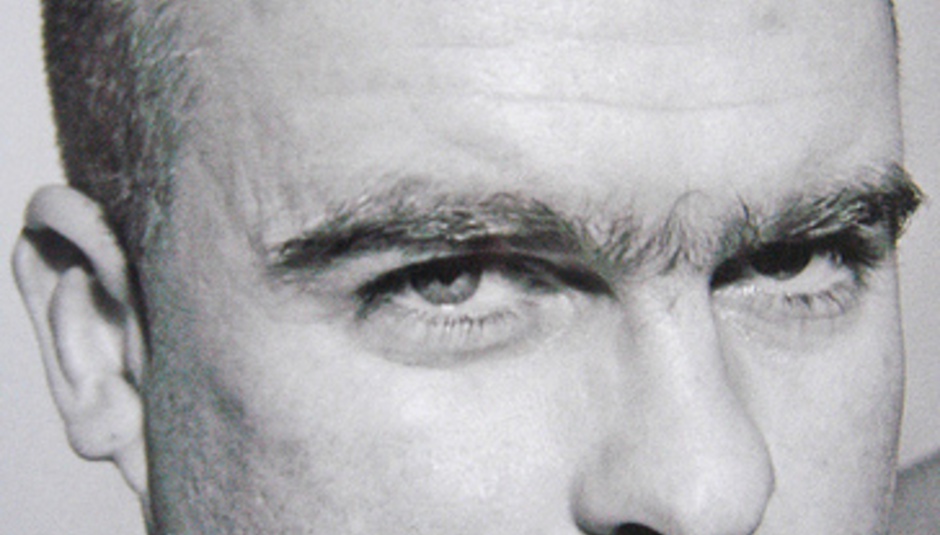
You write to make an impact: A tribute to Steven Wells
Words: Everett True
Editors’ note: this is the full version of an article originally commissioned to run in a recent special edition of Philadelphia Weekly dedicated to former NME (and Philadelphia Weekly) music critic Steven Wells (‘Swells’) who’d died of cancer the week before. Space constraints meant it got edited down. We’ve chosen to run it in full here, both as tribute to Swells and also as an introduction to the week-long series discussing the changing role of the music critic in web 2.0 – hopefully it serves as an insight into a key approach to criticism.
You write to make an impact.
You write to entertain.
You write to put your message across.
You write, using whatever tools at your disposal. Entertain. You’re a music critic. ENTERTAIN. This is the entertainment industry, after all.
You write to make people remember what you’ve written and to act upon it. You write because you believe that you can change the world. If you didn’t believe that, you wouldn’t be writing. You’re a music critic and you don’t like something? DESTROY IT. Destroy it. If you love you also hate. So…DESTROY.
Engage, argue, inform, irritate…but above all entertain.
I first met Steven Wells – when? I have no idea. It was the early 80s, he was Seething Wells. I’d seen him winding up audiences from on stage – in squats and at colleges, in support to the fiery polemic of rock bands such as The Redskins and Poison Girls – with his own home-brewed brand of ‘ranting poetry’. It was hilarious. It was rapid-fire. It was male and brash and SHOUTED IN CAPITAL LETTERS.
I was intimidated. I thought there was no way our paths would cross – especially when he became Susan Williams and started winding up the NME’s readership in similar fashion: liberals hate the sight of a man who views everything in black and white, who doesn’t necessarily but argues vociferously and brilliantly that he does, who believes that everything he believes is right, who is able to prick at the pompous and polarise everyone he comes into contact with.
Swells was funny and opinionated and smart enough to realise his limitations and work within them. He did it for himself. He was from the fanzine world. He was a tastemaker critic for sure. People took notice of his opinions, and acted upon them. And let’s stop this whole “brilliant music writer with no real interest in music” line before it gets too out of hand, shall we? ‘Course Swells loved music: he just didn’t think responsibility should begin and end in the studio, knew that everything exists within a much broader context.
Swells was a tastemaker. He informed people’s opinions, challenged them, led them, changed them…most of this by default, by sheer force of his personality and peerless ability to entertain. If something was wrong, it was wrong. Didn’t matter what anyone else thought. ‘Course, Swells might then change his mind the next day. ‘Course he was immature.
We did eventually meet. We shared a love for exclamation marks, capital letters, immediate communication, impassioned sloganeering, comic books and the Three Johns/Mekons axis. We wrote several articles together – including a cover story for NME on fanzines where every second word was in UPPER CASE. Indeed, he ended up being my closest ally at the paper (and I never quite understood why: he was so brilliant and funny and infuriating – larger than life, for damn sure – while I had difficulty stringing a sentence together). He was a tower of strength for me, something I never forgot.
Later, we were rivals – me, as a notorious Melody Maker critic during the 90s: him, working his inspired devilry, still at NME. And that’s where we left it. I remained so jealous of him. He achieved so much. He touched so many. He defined and fulfilled his potential.
WHY WRITE ABOUT MUSIC?
WHY WRITE ABOUT MUSIC? WHY WRITE ABOUT MUSIC?
The generation of music critics I grew up among believed in the power of their words, their ability to change everything. Why shouldn’t they have? Everything was still centralised, power resided within the hands of the most confident or privileged or smart, punk had happened a few years before – proof it was possible for the insurrectionists, the immature and needy, to change people’s lives with a few well-chosen words and chords. Crucially, folk paid attention.
Never trust a critic who claims to be objective or impartial. At the least, they haven’t thought through what they’re doing.
Everyone was a tastemaker back then, and those that weren’t quickly got forgotten. The four papers (NME, Sounds, Melody Maker, Record Mirror) that comprised the UK music press at the start of the 80s were just about the only place you could learn about music (of any sort)…the American critics reneged on their responsibilities the moment they started demanding a college education.
This was the environment where myself and Swells received our schooling: constant argument, evaluation, examination, politicised and personal… if you didn’t create a persona for yourself, you stood no chance. It was a goldfish eat goldfish world. WHY WRITE IF YOU’RE NOT GOING TO CREATE AN IMPACT?
Swells saw the NME as a natural platform for his ranting. It was open to outsiders. It commanded a massive weekly audience. It was immediate. It prided itself on its polyglottic identity made up of diffuse critical approaches – sociological (looking at the effect music has on its audience), gonzo (what gives the finished story authenticity is the journalist’s involvement), analytical, reportage, music as consumer guide, and so on.
It’s been written since his death that Swells is best known for his writings at NME during the 80s. Not true. During the 80s, as brilliant and inspirational as he often was, he was operating at a paper that championed writers of his ilk. It wasn’t until most of the UK tastemakers fucked off towards the end of the decade that Swells really shone: as the NME’s one truly opinionated voice, he stood alone – whatever readers thought of his taste in music. He was unafraid because he didn’t know how else to behave.
Taste-maker critics are like Gods.
Believe in us, and we have the power to change worlds. Stop believing in us and we cease to exist. Do the public really require – or even want – a faceless ‘meta’ critic, the lowest common denominator of countless opinions, where all opinion is reduced to a mean average mark? Isn’t that taking all the fun away? Perhaps we could reduce all literature to a maths primer while we’re at it, and make sure rock bands all sound like Coldplay.
I guess the outpourings of grief surrounding Steven’s death all have something in common.
1) We’ll never see his like again.
2) We would like to see his like again but we won’t.
3) We miss those days of the tastemaker critic and isn’t the NME (etc.) a weaker publication for the passing of them?
Obviously we’re talking a certain demographic – specifically, the people who read Steven Wells – but there’s a hell of a consensus going down. Not one of the hundreds of comments and blogs I’ve read since Swells’ death has indicated that this perceived change in critical approach might be in any way considered a positive. And yet, considering the occupation of many of those posting (fellow critics working within a tastemaker-free environment), surely it must? Surely, it must.

Excellent piece
Was a bit worried at the start though, thought we might have another 'He' on our hands!
I first read Swells within the pages of NME and as a teenager looked forward to his reviews which were always hilariously vitriolic or full of OTT praise. He was also a big Wildhearts fan and his support for them made my Britrock obsession at the height of Britpop feel a bit more justified. He also used the phrase 'rum bugger' in a review once which cracked me up. RIP Swells, you rum bugger.
something here doesnt really sit right with me;
i mean, i really liked this article cos right from the start he's pointing out that the main role of these legendary old nme guys was, above all else, to entertain. and be it thought or anger provoking or righteous or whatever, it was still entertainment; it was read for enjoyment, over criticism.
so he can write almost flippantly of swells changing his mind about what was good/bad, which is surely a significant flaw for any paid critic to have, yet its of little consequence cos that was part of his giant personality. the sames true for loads of those guys, they chose to be "tastemakers" and wrote this madly ENTERTAINING polemic instead of "this is good, buy it, this is bad, don't". they turned their works into art instead of criticism and i think thats whats these articles seem to be bemoaning the death of.
i mean, the whole point of working as a journalist / critic should be to report the facts in a manner so unbiased and accurate that yr audience is able to make up their own mind as to whether they'll enjoy the album/tour/whatever product. they make choices based on yr information and how good you are at getting it across to them dictates whether they'll trust you the next time.
swells and everett true and All Them Others made these personality cults to the extent that they became the central feature of whatever they were writing about. half the time it seemed they were more famous than their subject matter. how justified/worth it that was is a separate debate (i grew up in the nme/mm period he talks about, and regardless of their actual opinions they were always colourful and fun to read so id say totally. fuck you, northern uproar, you deserved it)
BUT i think its dangerous to call a death knell for music journalism cos less people listen to a bunch of ranty angry men than they used to, even if they were the best ranty angry men ever.
the boards here are full of illogical heartfelt and witty and passionate talk about things we love, and theres no I AM A TASTEMAKER egobolt cos theres so many of us. theres yr positive progress comment.
IMO alexei
Surely he's right about criticism?
I mean it's not the be-all and end-all of being a music journalist but anyone who wants to read a music review fundamentally wants to know
a) Does the person reviewing it think it is any good?
b) Why do they think it is or isn't any good? (ideally with enough info so you can tell if this person looks for the same things in music as you do)
c) Will I like this band or album?
It's all well and good if music journalist does more than that as well but certainly, with reviews, it's the item being reviewed rather than the reviewer people are interested in.
Obviously a lot of what Swells did was opinion pieces, and obviously with that you read it for the entertainment and opinions of the writer and is a different kettle of fish entirely.
ahem
or at least it shouldn't have to be, the creation of an entertaining piece of writing on the form is surely as worthwhile as the transmission of 'facts'. I agree there is an issue of responsibility to some degree - if you are trying to champion a new band, then don't say 'they are shit' or pretend they're a different genre (unless you think it'll do good), but hyperbole, tangents, sarcasm, exaggeration and gratuitous venom are all far more effective ways of achieving that than drily writing down 'the facts'... if that happened everybody would basically attempt to write the same review, there will be no style and no point (though arguably that's what this week is concerned about). I guess arguably that's sort of why people have a problem with the P4K school. If somebody says (and I'm taking it you are the band, or I think you are..?) 'The new Johnny Foreigner song sounds like Jesus raping a herd of angry basilisks' then even if you think '????' the underlying intent is surely a better compliment than "the move from 4/4 to 6/8 is accomplished dextrously"
Swells was a contentious character because I think it always appeared pretty arguable how much he really liked music. Probably a lot, but y'know, Everett was clearly always wildly biased and exaggerating constantly, and as such was of incalculable help to any number of new bands - famous as he was for self-promotion, his legacy is spoken of now more now as his hand in Riot Grrl, grunge and the mags he set up this decade. Or at least, that's how I think it's perceived.
ah ok
see, i strongly disagree with yr first point, if we're talking about pure journalism - the facts should be what you build yr article on. and if yr a good enough writer then you make yr entertainment out of that. and, if you worked for what car or total film or edge any other non music reviewy (?) place then that'd be like, THE GOLDEN RULE.
like, i hate to bring it up again, glorious amiga power had the same personality-cult with it's writers as nme/mm did, but its motto was - DISSEMINATE ESSENTIAL INFORMATION; start with the facts and entertain-them-up. maybe thats why those guys have more solid careers now? i dunno.
its odd how music criticism has evolved on this weird branch. yr right, id far rather read about jesus rape than time change, and i've probably bought more records off the back of wild passionate writing like that than unbiased comparative analysis. but that's because the writers have been so skilled at making me empathise with them, not because theyve found a way to out hyperbole the last thing they wrote.
i think theres a line between objective criticism and pure ILOVE/HATETHIS splurge that music writers always fall around and its wildly dependant on who they are and who they're writing for.
anyway i think were sort of arguing the same point from opposite sides of the fence. yr wilson, i wont get to see yr face till the last episode.
Fact? What facts?
Johnnyforeigner's idea that there are such things as objective facts in music criticism is simply laughable. It is ENTIRELY subjective. When reading Swells, or to delve further in to Classic Rock Journalism™'s murky past, Nick Kent, Richard Meltzer or whoever, it was the combination of your existing knowledge of that particular writer's obsessions and your understanding of their particular language that gave their words context and weight, and allowed you to agree, dismiss or be intrigued. And now we have a tsunami of weightless bloggers (and 50-word capsule reviewers) of whom we care little and know nothing. We are floundering in a world without context or meaning.
meh
i disagree, yr confusing opinions and facts.
yeah
it's an interesting area. I mean, I do write for a living and am very aware that I'm actually NOT a particularly hyperbolic writer and I couldn't really do the Swells thing because I find it hard to be satisfied with an incoherent argument... but I dunno, I never had any dealings with Swells, but from everything I know about him I do think that at heart he probably one hundred per cent believed in what he was writing about, even if it was in his nature to make his opinion more provocative that it strictly NEEDED to be, but I think if you believe in the core or what you're saying, that's gotta be as good as a fact, right?
Also:
as Stuart Braithwaite alludes to in his article and Everett discusses above, maybe the days of a 'tastemaker' journalist in the truest sense are gone, in that there are no publications left which can actually grant a journalist that level of power (save perhaps Pitchfork) but just because there aren't 'Big Men' in the style of Swells and Everett True: Nineties edition doesn't mean writers of their equivalent don't exists - Miss AMP, kicking_k and the man, the legend John Doran would almost certainly have been fondly regarded MM journos if they'd been about a bit earlier, it's just the question of whether or not any sort of mass forum for them exists anymore.
Which is obviously part of what this week's about, but I think maybe people are a little too soon to converge the idea of 'music journalist with personality' with 'Gonzo'; Matt Taibbi (the only reason to read Rolling Stone) is kind of semi-Gonzo and I it's better having a guy like that writing about the big issues than have him demolish a Coldplay album, awesome as that would be.
Yus.
The only facts are: THIS IS WHAT I THINK ABOUT THIS ALBUM/BAND/SHOW/MILK CARTON/EXCESSIVE USE OF AUTOTUNE.
"We miss those days of the tastemaker critic and isn’t the NME (etc.) a weaker publication for the passing of them?"
Are you seriously trying to tell us Mr True that the "tastemaker critic" isn't still prevalent in the likes of the NME? And no, I don't want tastemakers ramming the same artists down my throat every time I read one of their sodding columns. Having an opinion is one thing, but playing God (oh sorry, I mean "tastemaker") is another entirely.
criticism is not journalism is not cynicism
People are always confusing the three. Journalism aspires to be 'objective'. How is a personal opinion objective? Also, I do not for one second believe in a Golden Age of Music Criticism anymore than I believe in a Golden Age of Music. It's all down to individual perception. I've written more about it here.
http://everetttrue.wordpress.com/2009/07/14/um-music-journalism-r-i-p-anyone/
amiga power.
lovely.
Oh Jesus, man...
4) Where has this skewed belief that we no longer require experts sprung from? Fuck, don’t whisper it to the building trade or in hospitals (for example).
People don't...categorically don't...need experts in the field of music criticism. It provides a little entertainment, possibly a little filtering, which probably matters far less than you perceive.
I can find my own way in the music I listen to while rarely consulting a critic. I can't really install a central heating system, perform a self-sppendectomy or reglaze a window.
You're slightly more WELL KNOWN than my GP but considerably less IMPORTANT...don't conflate the two.
oh it's linear.
this was after reading ET's blog
taste = ENTIRELY subjective. BALLS.
anyone with an ounce of musical knowledge knows that certain chord progressions are more pleasant, and so on...
...on a physiological level we recognize harmonic resolution, and actually kinda want it...
...this is why the same chord progressions crop up again and again, in hymns and hits alike...
...take that to it's logical conclusion and there are (sickeningly effective) programmes to calculate the likelihood of a hit, before offering a demo to Beyonce (or whoever), although anyone who shuns commercial radio is unlikely to come across songs that have been subjected to this process...
For the not-wholly-passive-consumer (i.e. those who choose their source of information, get to know the idiosyncrasies of the writers, read interviews before they've heard a note, etc.) "Taste" is - Yes - a personal preference for more or less discord in your music (Coke vs. Ale); for more or less musical and instrumental surprises before harmonic resolution ("Transformers" vs. Tarkovsky); for a more or less ingenious fit between the content of the lyrics and the structure & arrangement of the music (Oasis vs. Sunset Rubdown)
Without specifying the cleverness of the "shift from 4/4 to 6/8" etc. (arf - good point, well made), writers can tell you quite helpfully whether a band does all of the above (pointing towards an objective opinion, even if they don't quite reach it) AND compare it to "a herd of wildebeestes toppling out of an elevator" or the "Princess Diana Fistf***" (...surprisingly useful information itself, yer choice of metaphor)
Dom. Please elaborate. Who are the tastemakers?
What do they do? How is it different from putting bands on the cover likely to shift units / bring in web-traffic / etc., and how much does this differ from "good business sense"?
Are you talking about lazy journalists who simply don't like that many new bands? Why read them? Not being argumentative, just not sure what you mean...
the GP thing's not REALLY a very helpful line of argument though
because it ends up at a place where you say culture and the arts is not/are not a valuable thing.
It's all relative, I'm sure Everett has done more for culture by what he did to promote Riot Grrl etc than your GP has ever done.
er, not to diss your GP of course
I just don't see they're very comparable lines of work, a music critic obviously does not provide a service in the same way as a plumber, but that's the nature of the arts. By your own logic nobody in your record collection has as much value as a window-glazer.
Yes but you can be a not-wholly-passive consumer
and source your music just as much from things like friends' opinions, support bands you've seen, blogs, messageboards, label rosters of bands you like etc etc.
I'm not anti-music-journalism at all but it's just not that important.
And as for musical invention before resolution, this so often ends up in meandering arbitrary dissonance because they can't find the cadence in their heads. There's room for all sorts, but I'd put a lot of the top 20 above what a bearded man in zone 2 has done with a digitech pedal and some anachronistic keyboard, before crayonning a 7" cover.
People get mugged either way.
(disclaimer: I have a beard and live in zone 2)
exactly...
I was quoting from the blog and how it's fatuous to compare the importance of music criticism 'experts' to medical / building trade experts.
Only to the point where I think you can realistically believe in the necessity for one while doubting the necessity of the other...definitely in these times.
experts are experts are experts
you can choose to live your life without them, of course. no worries. depends how much you care about your health/lodgings/music really.
christ, what an idiotic thing to say
so you don't care about music if you're not continually checking what your "tastemaker critic" has to say about it? it seems to melike a reliance on somebody else's opinion to formulate your own shows less interest. its funny to see a week of articles from obsolete journalists bemoaning their own obsoleteness. I welcome the end to self indulgent "tastemaker critics" who elevate themselves above their subject matter (and indeed, everybody else)
Ok
well I'll source my pointing / roofing experts from The Yellow Pages.
My medical experts from my referrals, public statistics & other patients' reccomendations
And my musical expertise from anyone who consistantly turns me onto stuff I like, be it friends, blogs, messageboarders, small labels, promoters or a journalist. If the latter entertains me while doing so then great - he's earning his wage, but taste / tastemaking-wise there's no difference really...not any more. Not now promos are out of the window.
People aren't stupid - you trust the opinion of anyone who consistantly performs, or someone who maybe turns you onto stuff you'd not expect to like. It's just that these people's roles are no longer really mandated or validated by who pays them.
Swells / NME
Why did he leave NME? I remember he suddenly left in the early 00s with no mention of why.
Don't be stupid
If you're really interested in something (anything...), you read books about it, magazines, watch movies, go to events, discuss with your friends/message boarders, buy merch and probably start doing it yourself. To suggest that you 'care' about music and that consists entirely of listening to it and formulating your own opinions from the ether is ridiculous. While I don't need someone telling me to like Oasis every week, I live for writing/ers with an agenda and identifiable personality talking about what fires them up or turns them cold.
I live for the day
'Tits Out Terror Teenage Totty' is on the National Curriculum. R.I.P Swells, thanks for the memories.
Not true.
Others have mentioned the qualitative differences between, say, healthcare professionals and art critics. I think the difference there is generally so obvious that it's hard to talk about without seeming patronising, so let's narrow it down further and think about the crucial differences between even videogame and music critics.
A music critic has a very limited set of objective criteria to work with, because there are no definitive structures for music. On one hand, you could say anything that obscures the message of the music (whether that's the melody, the rhythm, the lyrics, whatever) is an objective criteria; but on the other hand, ambiguity and noise and lo-fi has its places in music too.
Not so in videogames journalism. Lots of games have an underlying structure; a set of core mechanics that can -not- be enahnced by obscuring them. Putting some distortion on the lyrics of a song may or may not enhance it; putting a filter on the screen of a game of chess so that you can't make out the pieces can only hurt the game.
But what if your filter changes the rules of the game? Perhaps it adds a sort of 'fog of war' to chess? That is the role of an expert in videogames criticism; to identify changes in the underlying ruleset, to relate them to what has gone before, and talk about how successful the individual title has accessed the rules of the basic game.
This role doesn't exist in music journalism. "Song X is better than song Y because it has better guitar playing." "Eh, I prefer the sloppy sort of solo." Perhaps the guitar player who did song X could replicate the 'sloppy' solo in song Y, and this is something that an expert music journo might like to pick up on; but this makes no functional difference whatsoever to the average listener/consumer.
So while experts are indeed experts, some experts are fundamentally more useful than others.
hmm, formulating your own opinions from the ether
yes, that mysterious ether that is THE THING ITSELF. reading a good article on music is great; but the idea that nowadays, with the absolute accessibility everybody with a fast internet connection has, "tastemaker critics" are a *necessary* step in finding music we like in the same way a GP is in us being healthy is laughable. i'm fairly sure if you asked your friend/message board for recomendations on music and your bowel cancer one of them would be pretty apt and one of them would not. the fact you listed numerous things that aren't reading what your "tastemaker critic" has to say kind of undermines yours and true's arugument that the music critics are necessary experts for people who "care" about music. everybody who has any interest in music can be (and is) a tastemaker critic, everybody has access to the same resources
Surely there are choices?
I mean, if I'm interested in a record, I'll read a few publications to form a consensus of sorts, for myself, and look for familiarities in their message. Surely Swells was just another facet to that consensus, and helped build and catalog a much more valued and insightful overall critical response to the release of any piece of art.
The bigger picture
I mean, if I'm interested in a record, I'll read a few publications to form a consensus of sorts, for myself, and look for familiarities in their message. Surely Swells was just another facet to that consensus, and helped build and catalog a much more valued and insightful overall critical response to the release of any piece of art.
The way I see it tastemakers could be labelled as
being editors who force certain artists on their writers and readership on a regular basis, who will not allow other artists not on "their radar" to be given exposure and who insist on every piece about said artists to be positive, or else.
It has been prevalent certainly for this decade, hence the reason why certain acts are pushed by every publication playing follow the leader with the next one.
yes
this is precisely why all DiS coverage of Bloc Party, Cut Copy, Friendly Fires, Phoenix and various others has been all positive. it's a conspiracy, i am the evil empire.
But at least they're not The Twang...
or Plastic Fantastic.
But there is a point there
No band is beyond criticism and critical consensus is to be avoided at all costs. For example, I may like Sonic Youth rather a lot, but Swells' arguments on why they were shit make a lot more sense to me than a lot of fawning articles to the opposite, so are just as vital whether you agree or not. There are several bands that coast by on critical consensus against every reasonable argument (see Oasis on 'Be Here Now' and every other album they're making a 'comeback' on).

armchair dancefloor 39: Mount Kimbie interview, Bobby Browser, Powell, Move D, Leon Vynehall...
DiS meets John Lydon - Part 1: The Man
DiS Does Singles 20.05.13: Paramore, Laura Marling, The Replacements
DiS joins the Music Alliance Pact + May 2013's global MAP compilation
Drowned in Bristol #12
DiS Does Singles 13.05.13: Swim Deep, These New Puritans, The National
Comments
- Post a new comment on this article